The psoas is often called the “muscle of the soul” because of its deep connection to physical and emotional well-being. Here are some key reasons for this name:
1. Deep Connection with the Body and the Center
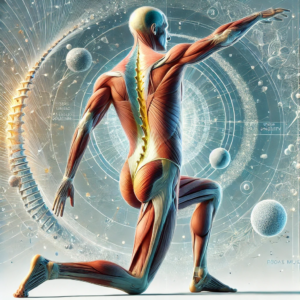
The psoas is one of the deepest muscles in the human body, connecting the spine to the legs. It extends from the lumbar spine to the femur (thigh bone). Playing a key role in core stability, posture, and movement, it is seen as a central pillar for balance and body alignment.
2. Storing Emotions
The psoas is closely linked to the autonomic nervous system and the body's "fight or flight" response. Some practitioners believe that emotional tension and trauma can be stored in the psoas because it is deeply connected to the nervous system. Chronic tension in this muscle could reflect unresolved stress or emotional pain.
3. Connection with Breathing
The psoas is in direct interaction with the diaphragm, the muscle responsible for breathing. When the psoas is tight or contracted, it can restrict the movement of the diaphragm, leading to shallow breathing and making it difficult to relax. In many practices, deep, conscious breathing is seen as a path to emotional release and calming the mind. A relaxed psoas thus allows for deeper, fuller breathing, promoting a sense of peace and emotional balance.
4. Spiritual Meaning
In some spiritual and yogic traditions, the body and mind are seen as intimately connected, with certain muscles and organs possessing spiritual significance. The psoas, due to its central position and grounding role, is believed to directly influence a person's sense of stability, security, and well-being. When relaxed and functioning properly, it is seen as a means to access a deeper connection with one's inner self or "soul."
5. Freedom and Movement
The psoas plays a crucial role in mobility, particularly in actions such as walking, running, and sitting. A healthy psoas allows for fluid, unrestricted movement. In many cultures, fluidity of movement is associated with vitality and freedom of expression, linking the psoas to a sense of emotional and spiritual release.
In short, the psoas is nicknamed the “muscle of the soul” because of its deep anatomical location, its role in core stability, its connection to breathing and emotions, and its importance in movement. It is seen as a link between the physical body and emotional or spiritual experiences.
The role of the psoas
The psoas, which includes the psoas major and psoas minor, is one of the most important muscles for core stability and movement. It is part of the hip flexor group, and its main role is to flex the hip joint and lift the upper leg toward the body. Here is a detailed analysis of its roles:
- Hip flexion
• The psoas major is a powerful hip flexor. It lifts the thigh toward the torso, enabling movements such as walking, running, and climbing stairs.
• It works in conjunction with the iliacus muscle (together forming the iliopsoas) to perform these movements. - Spinal stabilization
• The psoas connects the lumbar spine to the femur, helping to stabilize the lumbar spine and pelvis.
• It plays a crucial role in maintaining posture and alignment, supporting the spine when sitting, standing and during movement. - Lumbar flexion and lateral flexion
• It helps with flexion of the lumbar spine and can also help with lateral flexion (tilting of the spine to the side), facilitating movements involving bending or rotation of the torso. - Connection between upper and lower body
• The psoas is the only muscle that directly connects the spine to the leg, making it essential for transferring forces and stabilizing the trunk during dynamic movements. - Role in balance and posture
• Through its attachment to the lumbar vertebrae and pelvis, the psoas helps maintain upright posture and good balance, especially during transitions between sitting and standing.
Overall, the psoas is crucial for flexion of the hip, stabiltrity of the tronc, spinal support and alignment postural. It is often targeted in sports training and rehabilitation exercises because of its importance for movement and posture.
What to do to have a healthy and effective psoas muscle
To maintain a healthy and efficient psoas muscle, it is essential to focus on proper movement, flexibility, strength, and balance. Here are some practical steps and strategies:
1. Stretches for flexibility
The psoas can become tight due to prolonged sitting or repetitive movements, so regular stretching is important:
- Lunge Stretch (Hip Flexor Stretch):
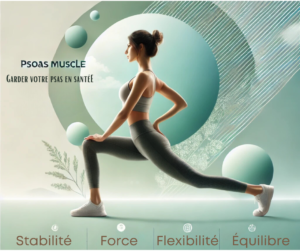
- Step one leg forward into a lunge position and lower your back knee to the floor. Lean your torso forward slightly while keeping your torso upright to stretch your psoas.
- Bridge pose:
- Lie on your back with your knees bent and your feet flat on the floor. Lift your hips up while engaging your core to lengthen the psoas.
- Pigeon Pose (Yoga):
- This deep hip-opening posture stretches the psoas and surrounding muscles.
2. Reinforcement for stability
Strengthening the psoas allows it to function efficiently without overcompensation or tension:
- Leg raises:
- Lie on your back and raise one or both legs while keeping your lower back stable on the floor.
- Dead Bug Exercise:
- Lie on your back with your arms and legs raised. Lower one leg and the opposite arm simultaneously while engaging your core.
- Dynamic knee standing:
- Stand and raise one knee toward your chest while balancing on the other leg. This functionally activates the psoas.
3. Core Engagement and Stability
Since the psoas plays a key role in stabilizing the spine, strengthening the core muscles (abdominals, obliques, and lower back) is essential:
- Plank variations:
- Engage your entire core while maintaining a neutral spine. Side planks also build lateral stability.
- Bird Dog Exercise:
- In a quadruped position (on hands and knees), extend one arm and the opposite leg, engaging the core and psoas for stability.
4. Postural awareness
Poor posture can put excessive strain on the psoas. Focus on:
- Sit correctly:
- Keep your hips slightly higher than your knees to reduce psoas shortening during long periods of sitting.
- Avoid sagging:
- Keep your pelvis in a neutral position while sitting or standing.
- Change position regularly:
- Alternate between positions frequently to avoid stiffness.
5. Relaxation and release techniques
Chronic tension in the psoas can be due to stress, so relaxation is essential:
- Diaphragmatic breathing:
- Deep belly breathing relaxes both the psoas and diaphragm, helping to release built-up tension.
- Self-massage with a foam roller:
- Gently roll the front of the hip and upper thigh with a foam roller to release tension.
- Manual therapies:
- Techniques such as myofascial release, massage therapy, or craniosacral therapy can help relax the psoas.
6. Balance training
Incorporate activities that promote balance and coordination, thus dynamically engaging the psoas:
- Yoga or Pilates:
- These practices improve both psoas strength and flexibility while developing body awareness.
- One Leg Balance Exercises:
- Standing on one leg while performing movements functionally strengthens the psoas.
7. Avoid overuse and compensations
- Limit prolonged periods of sitting:
- Take breaks to stand, stretch, or walk around every 30 to 60 minutes.
- Cross training:
- If you are athletic, vary your workouts to avoid overusing the psoas (for example, alternate between running, swimming or cycling).
8. Nutrition and hydration
- Ensure adequate hydration and a diet rich in nutrients like magnesium, potassium, and calcium to support muscle function and recovery.
- Eat anti-inflammatory foods (like green vegetables, berries, and fish) to reduce muscle tension and inflammation.
By incorporating these strategies into your routine, you can maintain a strong, flexible, and functional psoas, prevent discomfort, and improve the overall efficiency of your movements.


